
Bachelor of Statistics
Menu
Learning Outcomes
| Learning Outcomes | Description |
|---|---|
| LO1 | Master basic concepts in probability theory, statistical theory, mathematics, calculus, and linear algebra; |
| LO2 | Master data analysis methods, including big data analysis, to solve problems in various fields; |
| LO3 | Be proficient in at least two statistical software packages and able to utilize artificial intelligence (AI) technology to support lifelong learning; |
| LO4 | Master the basic concepts of programming and statistical computation in data processing and analysis; |
| LO5 | Master other fields of knowledge and statistical modeling studies according to the student’s interests; |
| LO6 | Be able to design and select efficient data collection and generation methods, and apply them in surveys, experiments, or simulations; |
| LO7 | Be able to manage and process data and understand the characteristics of the data using statistical techniques; |
| LO8 | Be able to analyze and model data in accordance with phenomena and methodologies to support decision-making related to sustainability issues; |
| LO9 | Be able to present and communicate the results of data analysis in an easily understandable form, whether through graphical, written, or oral formats. |
| LO10 | Adhere to professional ethics and use technology responsibly in the application of statistics. |
Curriculum
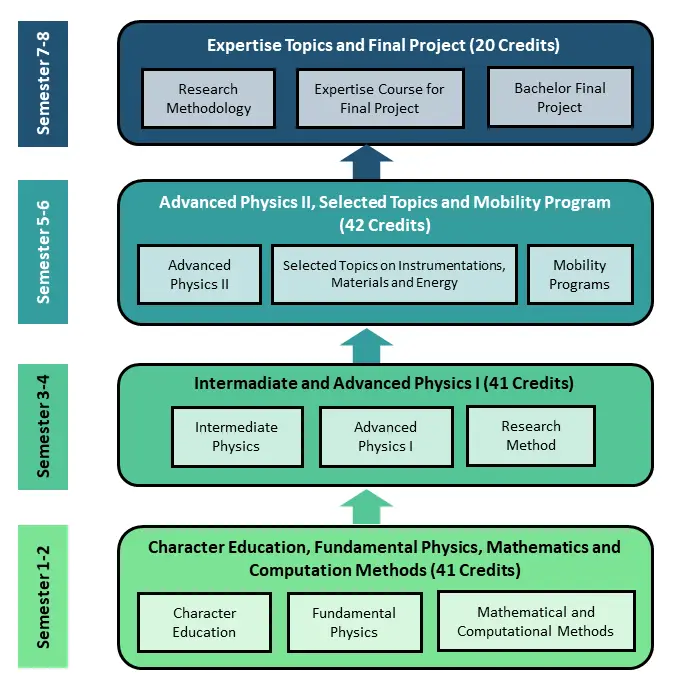
Course to LO
| Learning Outcomes (PLO) | Description |
|---|---|
| PLO1 | Uphold the values of PRIDE (Persistence, Responsiveness, Innovation, Discipline, Excellence), and demonstrate the ability to collaborate in the development of actuarial science. |
| PLO2 | Possess responsibility, self-confidence, emotional maturity, ethics, and a commitment to lifelong learning, while also demonstrating critical, creative, and innovative thinking. |
| PLO3 | Demonstrate sufficient knowledge in fundamental mathematics, supporting disciplines, and core actuarial science (Scientific Expertise), along with other relevant fields, and have the skills to apply this knowledge to enhance actuarial learning and research (Technical Know-How). |
| PLO4 | Exhibit sufficient knowledge in utilizing information technology and demonstrate proficiency in applying it to support actuarial learning and research (Technology Skills). |
| PLO5 | Effectively communicate actuarial issues both verbally and in writing with accuracy, clarity, and organization (Communication Skills). |
| PLO6 | Be capable of designing, analyzing, and implementing concepts and business processes for the advancement of core actuarial science using modern methodologies and measurement tools. |
| PLO7 | Demonstrate the ability to identify actuarial problems, develop critical thinking patterns, and determine appropriate solutions. |